
How to Clean an Oven Properly: A Professional's Step by Step
By the CCS team • 8 July 2026 • 5 min read
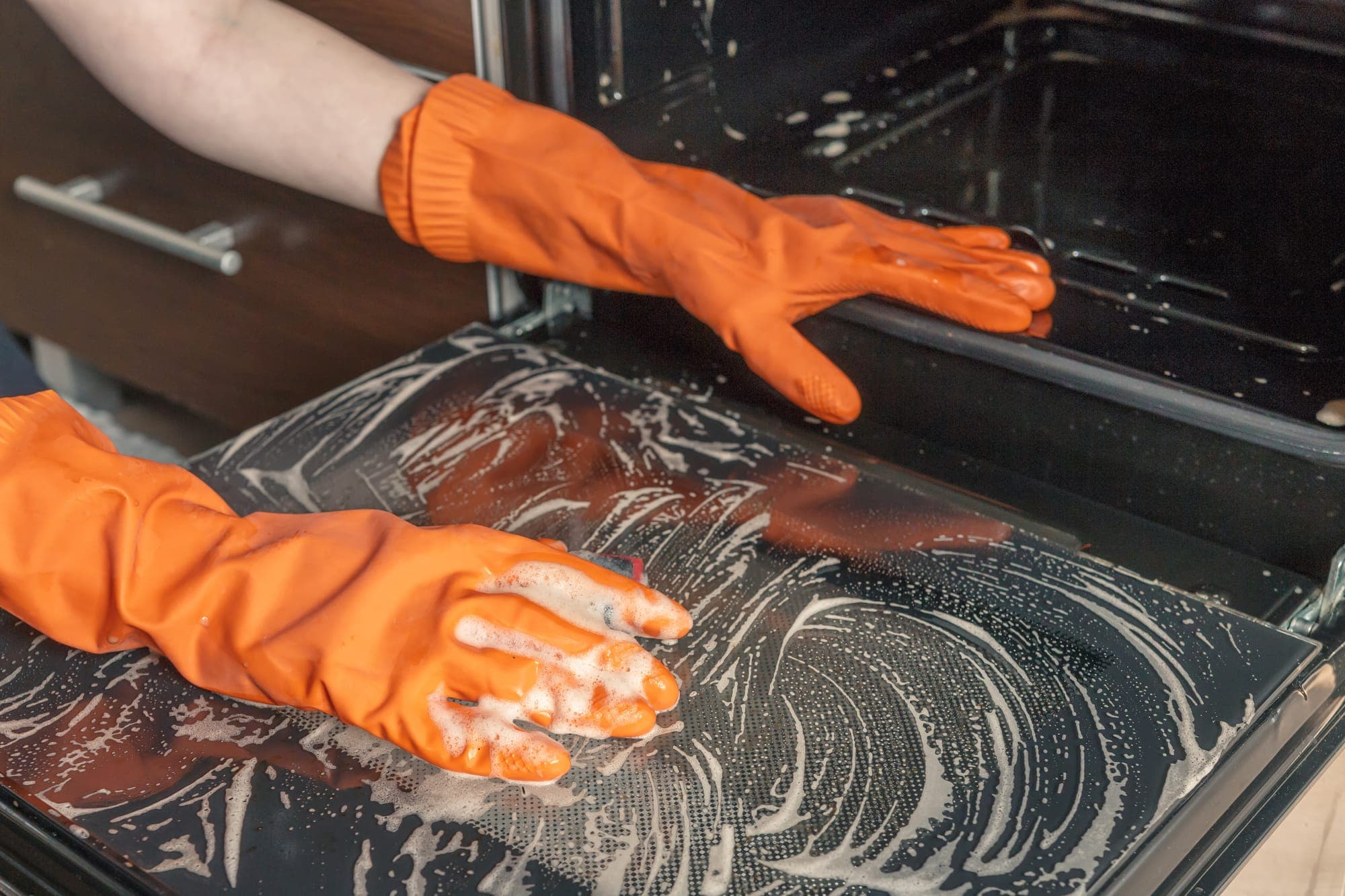
Ask ten cleaning companies how they clean an oven and most will say the same word: caustic. Caustic soda tablets cost about fifty pence, they dissolve burnt grease fast, and that is exactly why the cheap firms dip your racks in a bath of it in the back of a van. The catch arrives a few weeks later. Caustic attacks the chrome, the racks turn brown, and before long the same company is offering you three cleans a year with the fourth one free. That pitch only works because their own chemical created the repeat business.
What we use instead
Our cleaner is a gel blended for us by an industrial chemist. No caustic, no acid. It works with heat rather than by burning through soiling, which is why racks we clean stay silver instead of browning, and why the kitchen does not smell of fumes when we leave.
The two things a professional never does
First: no blades on the door glass. Oven glass carries a heat-reflective coating, which is why the panel is marked this side up. Scratch that coating with a scraper and the glass can crack the next time the oven runs hot for a pizza. We have seen it happen. Second: no caustic bag products for the racks. Same brown-rack problem, done in your own kitchen.
One exception, and it is deliberate. The enamel floor of the oven sometimes has spills baked into tar, and the only way to lift those is a scraper with a brand new blade. Fresh blade, flat angle, enamel only, never glass.
The method, start to finish
- Protect everything first: thick towels over the unit below the oven and across the working floor.
- Racks and side rails come out and go into a bath of very hot water with the gel cleaner. The heat and the degreaser do the work together, no caustic involved.
- Any tarred spills on the enamel base are lifted with a fresh blade, then the interior and the inside of the door get a coat of gel.
- Now the trick: the oven goes on at 50 degrees for five minutes, then off. That gentle heat activates the gel, and the brown film on the door glass wipes away with it.
- Everything is rinsed with hot water and microfibre cloths until no chemical remains, dried, and finished with a protective coating that slows the next grease build-up.
- On a standard oven the inner door glass comes out and is cleaned in the bath. On a range cooker it does not come out, and forcing it damages the spring mechanism, so we clean it in place.
The aftercare that buys you twelve months
Two habits keep a professionally cleaned oven looking new. Put a silicone baking sheet on the oven floor, about twelve pounds online, and every spill lifts out with it. And while the oven is still warm after cooking, wipe the inside of the glass with a hot soapy cloth, rinse with a warm one, dry with a tea towel. Do that and you will not need us again for a good twelve months, which is also the interval the manufacturers recommend for a professional clean. It is not just about looks: a clean oven heats evenly and it prolongs the life of the elements.
If your oven is past the point where a soapy cloth helps, our fixed prices start at £75 for a single oven and every clean follows the method above. No fumes, no brown racks, and you can cook the same evening.